
Science & Inventions
A material made of small robots finds one rhythm
A study published in Nature on October 14 shows how vibrations in a robotic material grow until it moves as a time crystal.
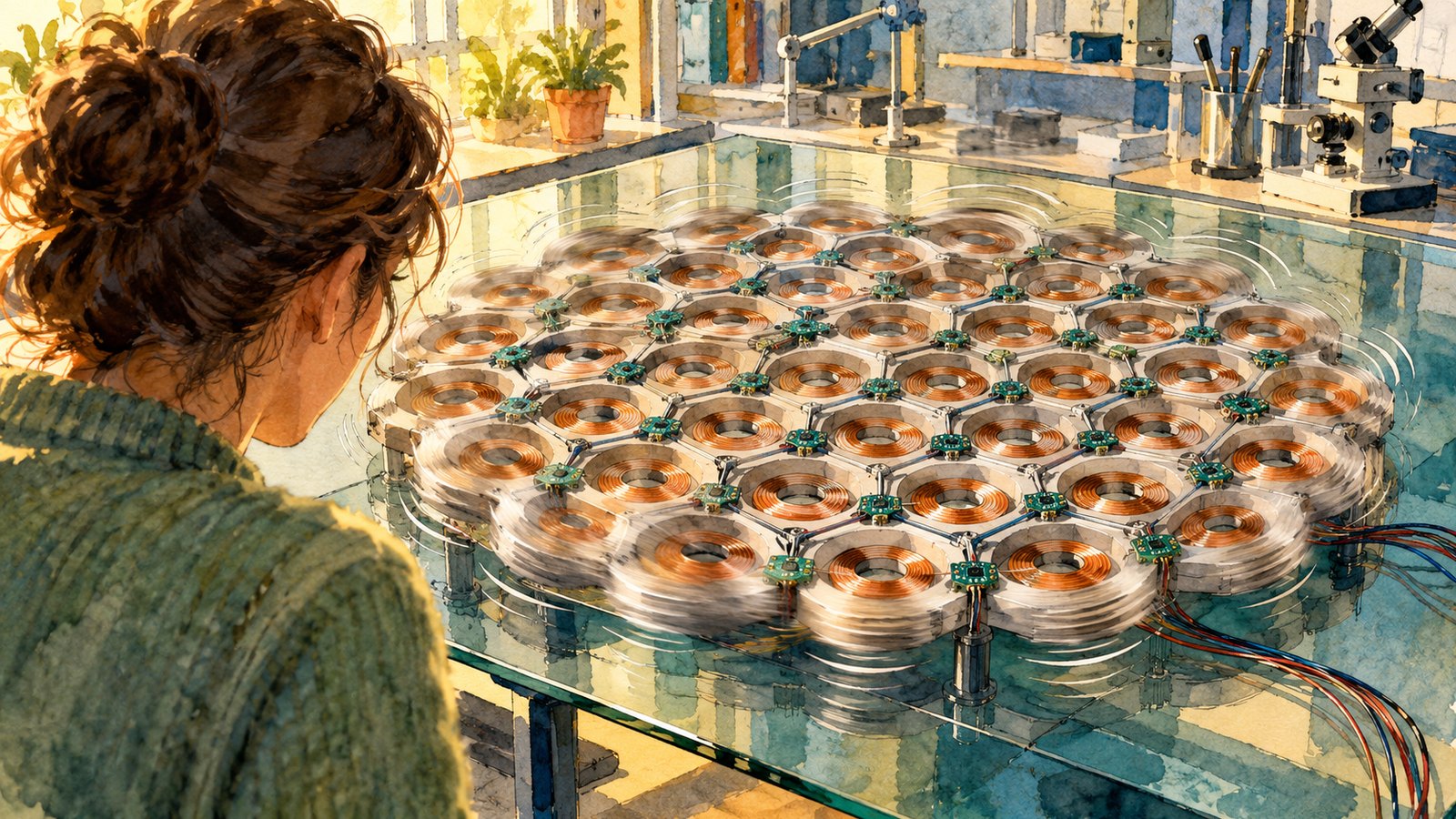
On October 14, 2026, a team of researchers, most of them from the University of Amsterdam in the Netherlands, published a study in the journal Nature about an unusual material made of small robots. When the researchers turned the material on and gave it a small push, each of its units began to vibrate on its own. Over time, these separate movements grew into larger and larger waves, until the whole structure moved back and forth in one steady rhythm. The team says that the material behaves as a time crystal.
To understand the idea, think of an ordinary crystal, such as a grain of salt. Its atoms are arranged in a pattern that repeats again and again in space. A time crystal is a form of matter whose pattern repeats in time instead: its parts keep moving in regular cycles, over and over. Many time crystals are kept moving from outside, for example by light. In the new study, nothing outside the material set the beat, and the rhythm came from within the material itself.
Word in this story
A regular pattern of movements or sounds that repeats again and again.
Over time, these separate movements grew into larger and larger waves, until the whole structure moved back and forth in one steady rhythm.