
Animals & Nature
Hybrid crabs multiply after a Bering Sea heatwave
A NOAA study published on October 19, 2026 links a surge in snow-Tanner hybrid crabs off Alaska to a 2018–2019 marine heatwave.
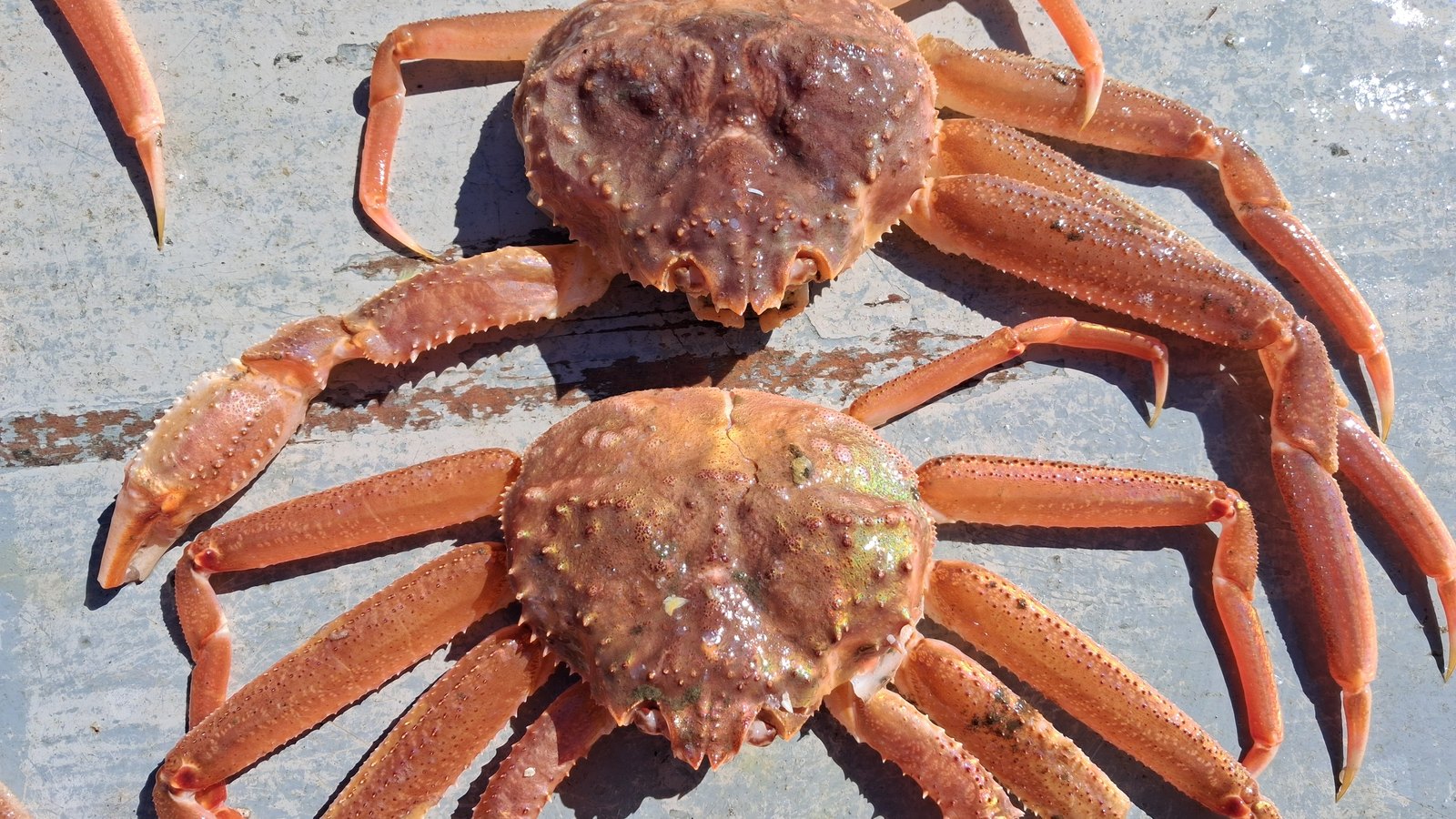
On October 19, 2026, scientists from NOAA Fisheries published a study about crabs in the eastern Bering Sea, off western Alaska. The study looked at hybrid crabs, which have one snow crab parent and one Tanner crab parent. Hybrids used to be rare, but in 2025 their numbers were more than 13 times the long-term average. The team linked this change to a marine heatwave, a long period of unusually warm sea water, in 2018 and 2019.
Snow crabs live in very cold water, while Tanner crabs prefer slightly warmer conditions. During the heatwave, the Bering Sea had very little winter ice, and the water became unusually warm. Between 2018 and 2021, more than 10 billion snow crabs disappeared from the eastern Bering Sea. Earlier NOAA research suggests that warm water made the crabs need more energy, so many could not find enough food.
Word in this story
An animal or plant whose parents come from two different kinds, or species.
A hybrid has a curved mouth, and its eyes can be a mix of red and green.