
Ẩm thực
Rice and shrimp take turns in Ca Mau's fields
In the Mekong Delta, farmers raise shrimp in salty water in the dry season and grow rice once the rain washes the salt away.
On September 29, 2026, farmers, scientists and officials met in Hong Dan commune, in Ca Mau province, to look at a way of farming that uses the same fields for both rice and shrimp. The event was organized by the International Rice Research Institute, known as IRRI, together with the Ca Mau Department of Agriculture and Environment and the Vietnam Rice Sector Association. It included a field demonstration and a workshop, and IRRI published a report about it on October 13.
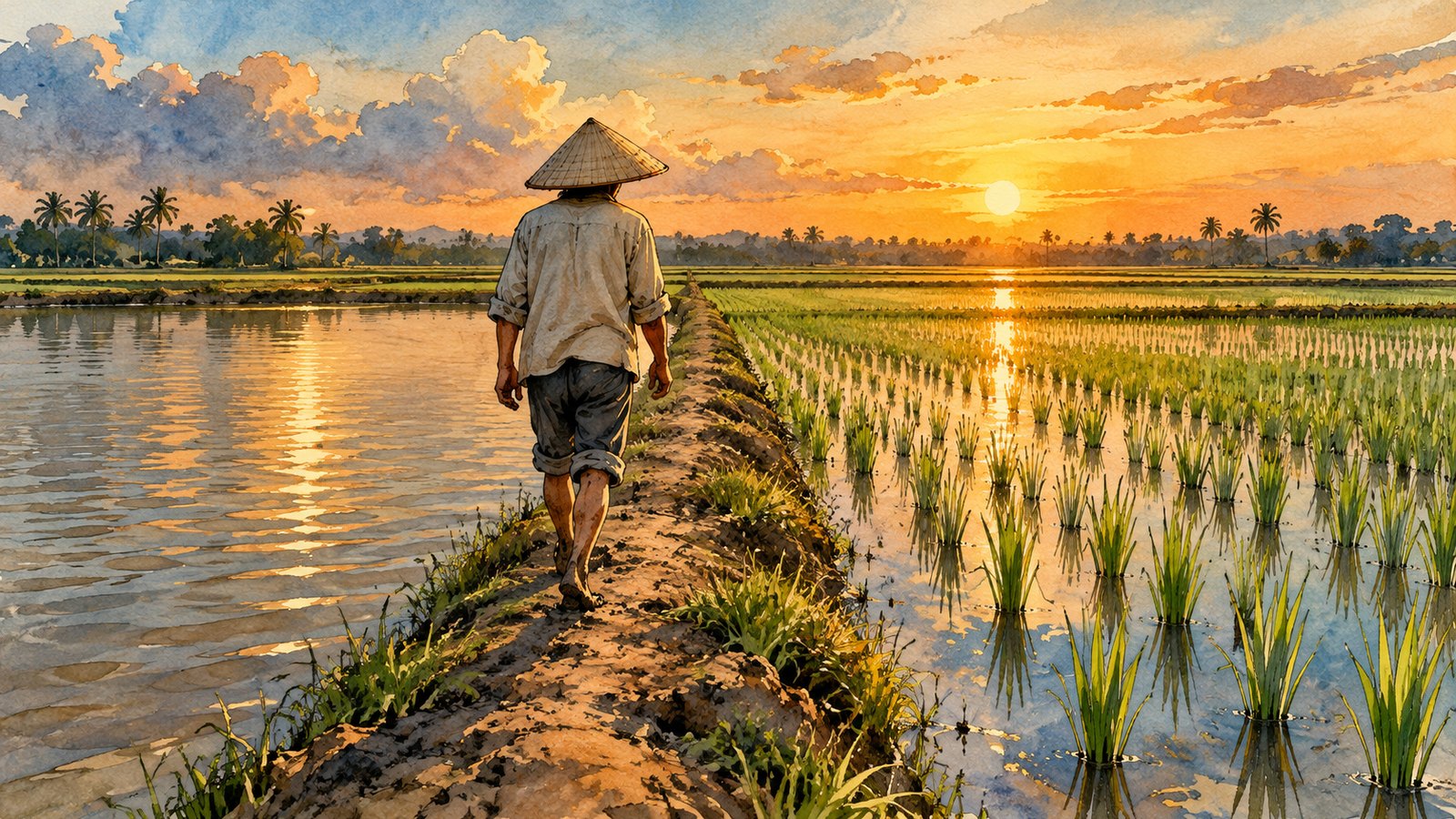
Ca Mau lies on the coast of the Mekong Delta, and IRRI describes it as Vietnam's largest shrimp producer. Farming there follows a cycle of salty and fresh water. In the dry season, salt water from the sea moves inland along rivers and canals, and rice cannot grow well in salty fields. Instead of fighting the salt, many farmers make use of it: they let salty water into their fields and raise shrimp. When the rainy season arrives, the rain washes the salt out of the soil, and the same fields are planted with rice. At the workshop, this idea was summed up as one land, two seasons, two products and one ecosystem.
Từ vựng trong bài
Năng suất, sản lượng: lượng nông sản mà một cánh đồng hay một trang trại làm ra.
The lower the salt level in the soil, the higher the rice yield.