
Lịch sử & di sản
Stone kept the shapes of Neanderthal wooden tools
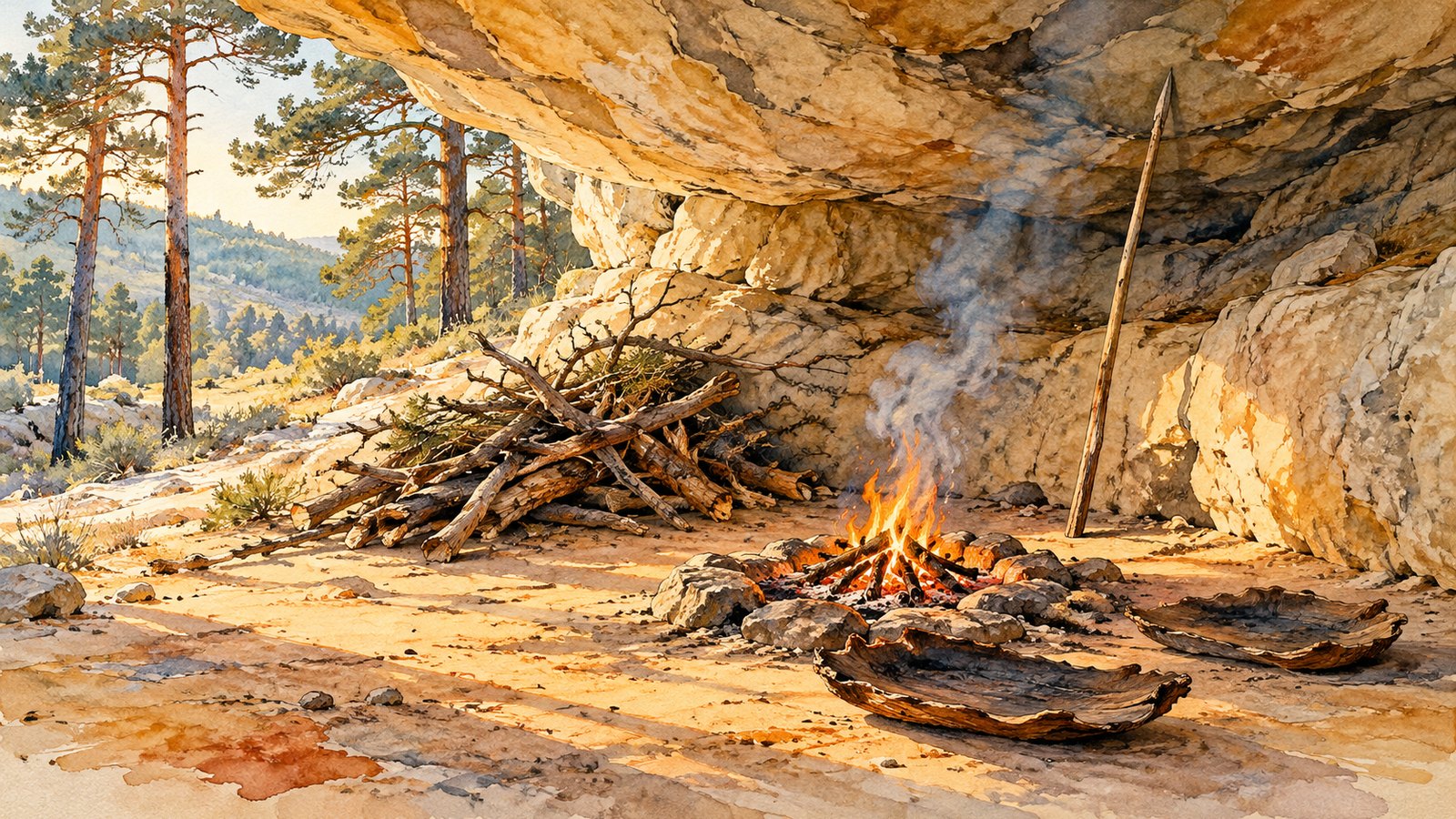
A study of 597 wood remains from a rock shelter in Spain shows how Neanderthals used wood for spears, trays and fires.
Most of what we know about Neanderthal technology comes from stone tools, because stone lasts and wood almost never does. A study published in Science Advances in October 2026 now adds wood to that picture. Researchers led by the Catalan Institute of Human Paleoecology and Social Evolution examined 597 wood remains from Abric Romani, a rock shelter in Capellades, in the province of Barcelona in northeastern Spain. The remains were found in 16 archaeological levels, layers that formed while Neanderthal groups were using the shelter between about 62,000 and 40,000 years ago.
How could wood last that long? The answer lies in the rock itself. The shelter sits under a cliff of travertine, a kind of limestone that forms when water rich in calcium carbonate leaves this mineral behind. At Abric Romani, calcium carbonate slowly built up around branches, logs and tools lying on the ground, covering them in a hard crust. The wood inside eventually rotted away, but its shape stayed in the crust. So what archaeologists find today are hollow molds: empty spaces in the stone with the exact shape of the original wood. In the best cases, the detail is so fine that even the cells of the wood can still be seen. Other pieces had been partly burned and survived as charred wood.
Từ vựng trong bài
Khuôn: một hình rỗng giữ hoặc tạo ra đúng hình dạng của một vật. Tiếng Anh-Anh viết là “mould”.
So what archaeologists find today are hollow molds: empty spaces in the stone with the exact shape of the original wood.